How to Reduce Salon No-Shows
Learn how to reduce salon no-shows with smarter deposits, reminders, booking policies, and client communication that protects your schedule.
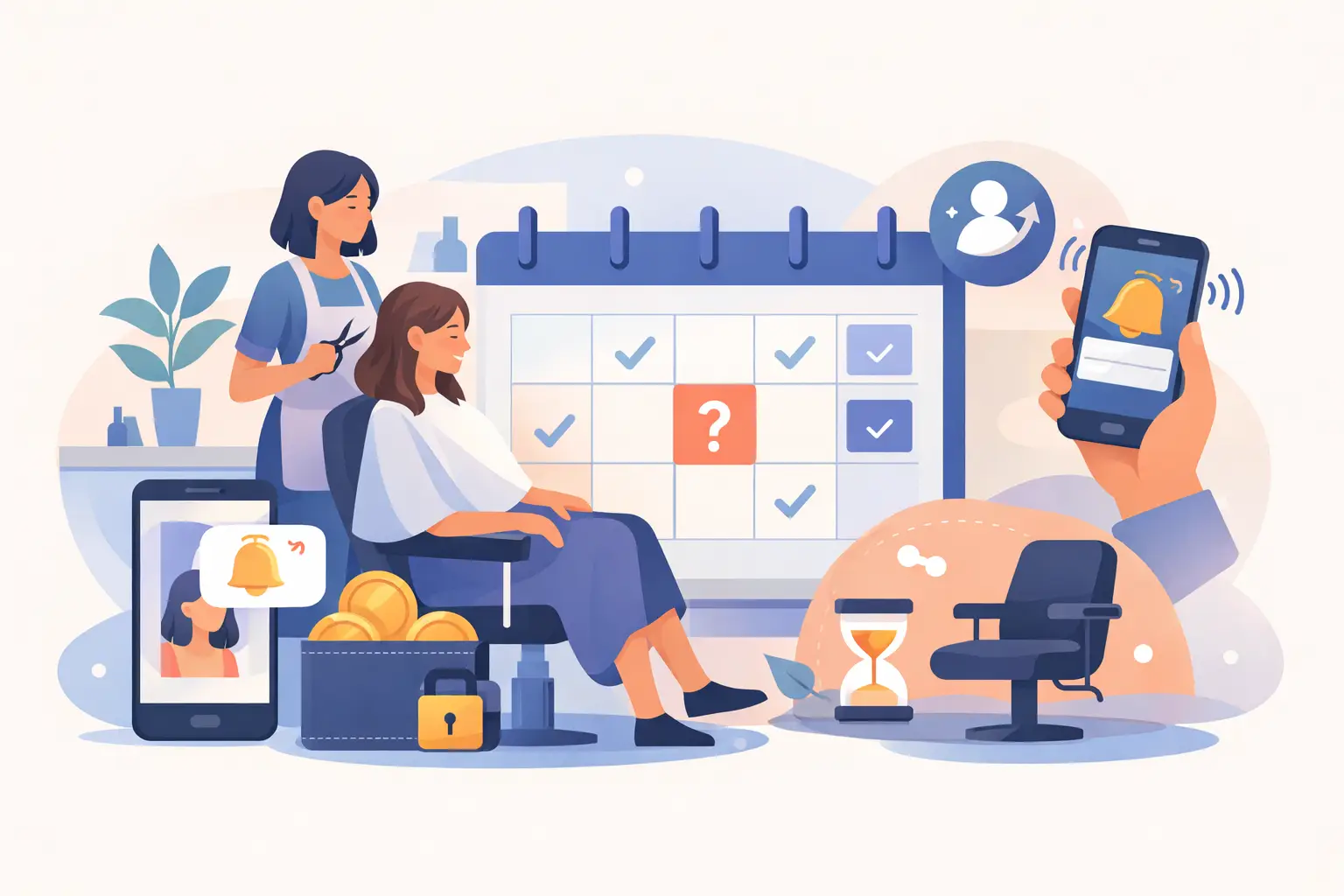
A no-show is not just an empty chair. It is lost revenue, disrupted timing, and a harder day for everyone else on your schedule. If you are looking for how to reduce salon no-shows, the fix usually is not one big change. It is a tighter booking process from the first inquiry to the appointment reminder.
Most salons do not have a client problem as much as a process problem. When booking is loose, policies are unclear, and reminders rely on memory, no-shows become more common. The good news is that they are often preventable.
Why salon no-shows happen in the first place
Some clients forget. Some double-book themselves. Some feel less committed because they did not pay anything upfront. Others get confused about timing, services, or who they are booked with. And sometimes the salon accidentally creates friction with too many back-and-forth messages, unclear policies, or a booking experience that feels informal.
That last point matters more than many owners realize. Clients tend to treat polished booking flows more seriously. When the experience feels structured, people are more likely to show up on time and less likely to disappear without notice.
Use deposits to make the appointment real
If you want one of the most effective ways to reduce no-shows, start with deposits. A deposit changes the psychology of the booking. The appointment stops feeling like a placeholder and starts feeling confirmed.
This does not mean every service needs the same deposit amount. A quick bang trim is different from a color correction or a multi-service visit that blocks a large part of the day. Higher-value and longer appointments usually justify a stronger commitment upfront.
The key is to keep the policy simple. Tell clients what is due at booking, whether it goes toward the final total, and what happens if they cancel late. Confusing policies create pushback. Clear ones create fewer disputes and fewer missed appointments.
How to reduce salon no-shows with better reminders
Reminders work best when they are automatic, timed well, and easy to act on. A reminder sent a week early helps clients plan. A reminder sent 24 to 48 hours before helps them confirm details while there is still time to reschedule responsibly.
Good reminders should include the appointment date, time, service, and any prep details that matter. If a client needs to arrive with clean hair or avoid a certain product beforehand, include that. Small points of confusion can turn into missed appointments.
The other mistake to avoid is relying on manual follow-up. It works until your day gets busy. Then reminders become inconsistent, and no-show risk goes back up. Automated reminders create a more dependable system and save time at the front desk.
Make your booking policy visible before checkout
Clients should not learn about cancellation rules after they miss the appointment. Put your booking and cancellation policy in front of them during the booking flow, not buried in a confirmation message they may never reread.
Keep the language plain. Explain how much notice you require, whether deposits are refundable, and what happens with repeated no-shows. Most clients do not need a long policy. They need a short one they can understand immediately.
If you make exceptions, be thoughtful. Flexibility can protect client relationships, especially for loyal regulars or real emergencies. But if your policy changes depending on who asks, clients notice. Consistency builds trust and helps your team enforce the rules without awkward conversations.
Tighten the gap between inquiry and confirmed booking
One reason salons lose appointments is that the booking process leaves too much room for drift. A client messages, asks about availability, says they will confirm later, and then either vanishes or shows up with the wrong expectation.
The cleaner approach is to move clients straight into a professional booking flow where they can choose a time, confirm details, and pay a deposit in one place. That removes friction and reduces the chances of an uncommitted booking sitting on your calendar.
For solo professionals and small teams, this matters even more. When every appointment slot has revenue attached to it, you cannot afford soft holds and vague confirmations.
Watch for patterns, not just isolated misses
Not all no-shows are random. Some happen more often at certain times of day, with certain service types, or from first-time clients who have not booked with you before. That does not mean you need a complex system. It means you should notice where the risk is highest.
For example, you may require a deposit only for new clients, longer appointments, or same-week bookings. You may also find that certain reminder timing works better for your audience than others. The goal is not to make booking harder. It is to add the right amount of structure where your schedule is most exposed.
Give clients an easier way to reschedule
A client who cannot make it is not always a lost appointment. Sometimes they just need an easier way to tell you. If rescheduling feels inconvenient, some people avoid the conversation and become a no-show instead.
This is where simple systems help. When clients can confirm, cancel, or reschedule without chasing your team through texts and DMs, you are more likely to save the slot or refill it in time. A polished process also feels more premium, which reflects well on your business.
Tools like Revenue Studio are useful here because they combine booking, deposits, and reminders into one workflow. That cuts down on manual follow-up and gives clients a clearer path from interest to confirmed appointment.
Reducing no-shows is rarely about being stricter for the sake of it. It is about making bookings feel clear, committed, and easy to keep. When clients know what to expect and your process backs it up, your calendar gets more reliable.