How to Streamline Inquiry to Booking Process
Learn how to streamline inquiry to booking process with deposits, reminders, and better follow-up to reduce drop-off and confirm more clients.
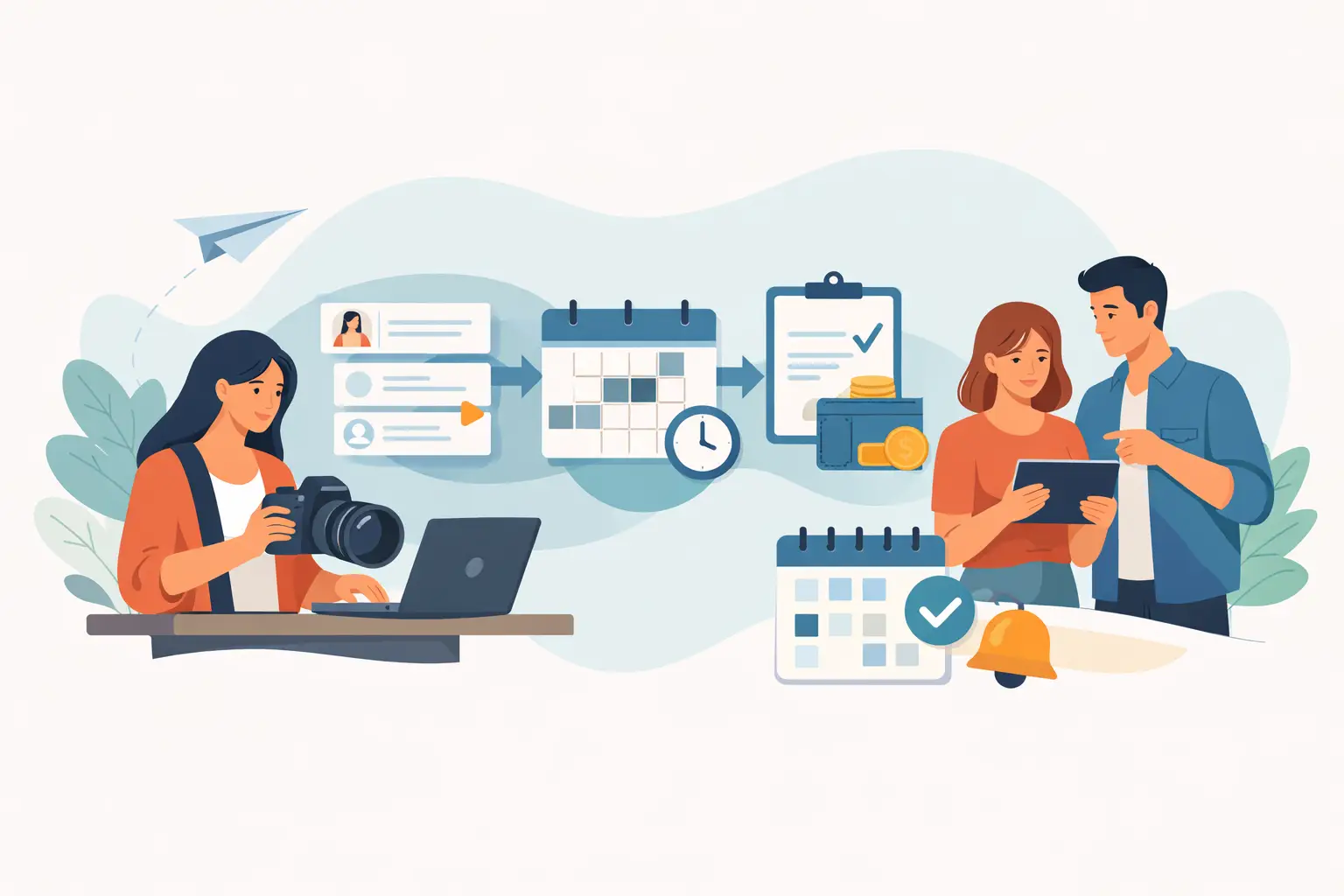
A client messages you, asks if you have availability, sounds interested, and then goes quiet. That gap between interest and payment is where a lot of service businesses lose revenue. If you want to streamline inquiry to booking process, the goal is simple: remove delays, reduce uncertainty, and make it easy for the right client to commit.
For photographers, spas, and other appointment-based businesses, this is not just an admin problem. It affects revenue, schedule quality, and the client experience. A slow or messy booking flow creates friction at the exact moment someone is deciding whether to book with you.
Why the inquiry to booking gap costs more than it seems
Most business owners notice the obvious loss first: inquiries that never turn into appointments. But the hidden cost is just as real. Every manual reply, every follow-up you forget to send, and every appointment held without payment adds pressure to your day.
It also changes how your business feels to clients. If someone has to wait too long for next steps, ask multiple questions to understand pricing, or send a second message just to confirm their spot, the process feels less polished than it should. That does not mean every client expects a big system. It means they expect clarity.
This is especially true when you sell time-based services. Your availability is limited. A premium slot that sits unconfirmed for a day or two can block another paying client. That is why a better booking process is not just about convenience. It protects the schedule you are selling.
What it means to streamline inquiry to booking process
To streamline inquiry to booking process, you do not need to automate every conversation or remove the human side of client service. You need to reduce the number of steps between "I'm interested" and "You're booked."
A strong process usually does four things well. It gives the client a clear path forward, collects the information you actually need, secures commitment with payment or a deposit, and follows up automatically so nothing gets missed.
The right level of structure depends on your business. A photographer booking mini sessions may want a fast, standardized flow. A service provider with customized packages may need a short conversation before sending a booking page. Streamlining does not always mean fewer touchpoints. Sometimes it means better-timed ones.
Start by finding the friction
Before changing tools or rewriting your client messages, look at where inquiries slow down now. In many small service businesses, the problem is not a lack of leads. It is too much back-and-forth before a client can make a decision.
Maybe people ask about pricing because your offer is not clearly presented. Maybe they are ready to book, but have to wait for you to manually send times. Maybe appointments are being held without a deposit, which creates uncertainty on both sides.
One practical way to spot the issue is to review your last 10 to 20 inquiries. Notice where they stalled. Did they stop after the first reply? After you sent availability? After you explained the deposit? Patterns matter more than one-off situations.
If most drop-off happens before a booking link or payment step is sent, your process may be too manual. If drop-off happens after details are shared, the offer may need to be simpler and clearer. If people book but fail to show, the issue is not inquiry handling. It is confirmation and reminder flow.
Make the next step obvious
A lot of inquiries fade out because the client is interested but unsure what to do next. That uncertainty creates delay, and delay lowers conversion.
Your reply should answer the basic decision-making questions quickly: what is available, what it costs, what is included, and how to reserve the appointment. Not every business needs to send a full price sheet right away, but every inquiry should lead to one clear action.
For some businesses, that action is booking directly from a scheduling page. For others, it is reviewing a service option and then choosing a time. Either way, the client should not have to piece the process together from separate emails, texts, and payment requests.
This is where many smaller businesses accidentally add friction. They respond warmly and personally, but not clearly. A polished booking experience can still sound human. Clear does not mean cold.
Use deposits to turn interest into commitment
If you regularly hold time slots based on verbal interest alone, you are creating risk in your calendar. A deposit changes the relationship from tentative to confirmed.
That matters for two reasons. First, it helps reduce casual bookings that disappear later. Second, it gives clients a clear signal that the appointment is officially reserved. That sense of confirmation can improve follow-through as much as the payment itself.
The amount depends on your service and client expectations. For a shorter, lower-ticket appointment, a modest deposit may be enough. For premium or limited-availability time slots, a stronger upfront commitment often makes sense. The key is consistency. If your policy changes from one client to the next, the process feels less professional.
Deposits are not about adding pressure. They are about protecting time that cannot be resold easily.
Cut down on manual follow-up
When booking relies on memory, inbox scanning, or sticky notes, good leads slip through. That is usually not because the business owner is careless. It is because client communication is happening across too many places at once.
A better approach is to reduce the number of manual moments in the process. Once a client shows interest, they should receive the next step quickly. Once they book, they should receive a confirmation without you having to send it yourself. As the appointment approaches, reminders should go out on time.
This is one of the clearest ways to improve conversion without changing your service at all. Speed matters early in the booking process, and consistency matters later. If you are still manually sending every follow-up, you are spending time on work that can be standardized without making the experience feel generic.
Keep the experience polished from first message to reminder
Clients notice when the booking process feels scattered. A message on one platform, a payment request on another, and a reminder sent only if you remember can create doubt, even if your service is excellent.
A more polished flow keeps communication connected. The inquiry leads to a booking page or clear next step. The booking leads to payment or deposit collection. The confirmation leads to reminders. Each step supports the next.
That kind of consistency matters even more for businesses selling premium experiences. People are not just buying an appointment. They are buying confidence that the experience will be organized, professional, and worth their time.
This is one reason lightweight booking systems work well for solo professionals and small teams. You get structure where it counts, without adding the overhead of a larger platform built for a different kind of business.
Where simple systems beat complicated ones
There is a temptation to fix booking problems with more software, more forms, and more process. In practice, that can create a different kind of friction.
If your business is based on appointments, deposits, and client communication, you probably do not need a heavy business management setup to improve conversions. You need a clean flow that gets clients from inquiry to paid booking with fewer delays and fewer handoffs.
That is where tools like Revenue Studio fit best. Not as an all-in-one system for every business function, but as a practical way to bring booking, deposits, reminders, and client communication into one workflow.
The trade-off is that simplicity works best when your offers and policies are already fairly clear. If every inquiry requires a long custom sales conversation, no tool will remove that entirely. But even then, you can still standardize what happens after the client says yes.
A better booking process should feel easier for both sides
The best booking flows do not feel automated for the sake of it. They feel organized. Clients know what they are booking, how to secure it, and what happens next. You spend less time chasing confirmations and more time serving booked clients.
If you want to improve results, start with the moments where people hesitate: unclear next steps, no deposit, slow follow-up, or inconsistent reminders. Small fixes there can have a bigger effect than a full overhaul.
A good process does not need to be complicated to look professional. It just needs to make it easy for interest to become a confirmed appointment.