Small Business Appointment Management Software
Small business appointment management software helps service pros book faster, collect deposits, cut no-shows, and simplify client scheduling.
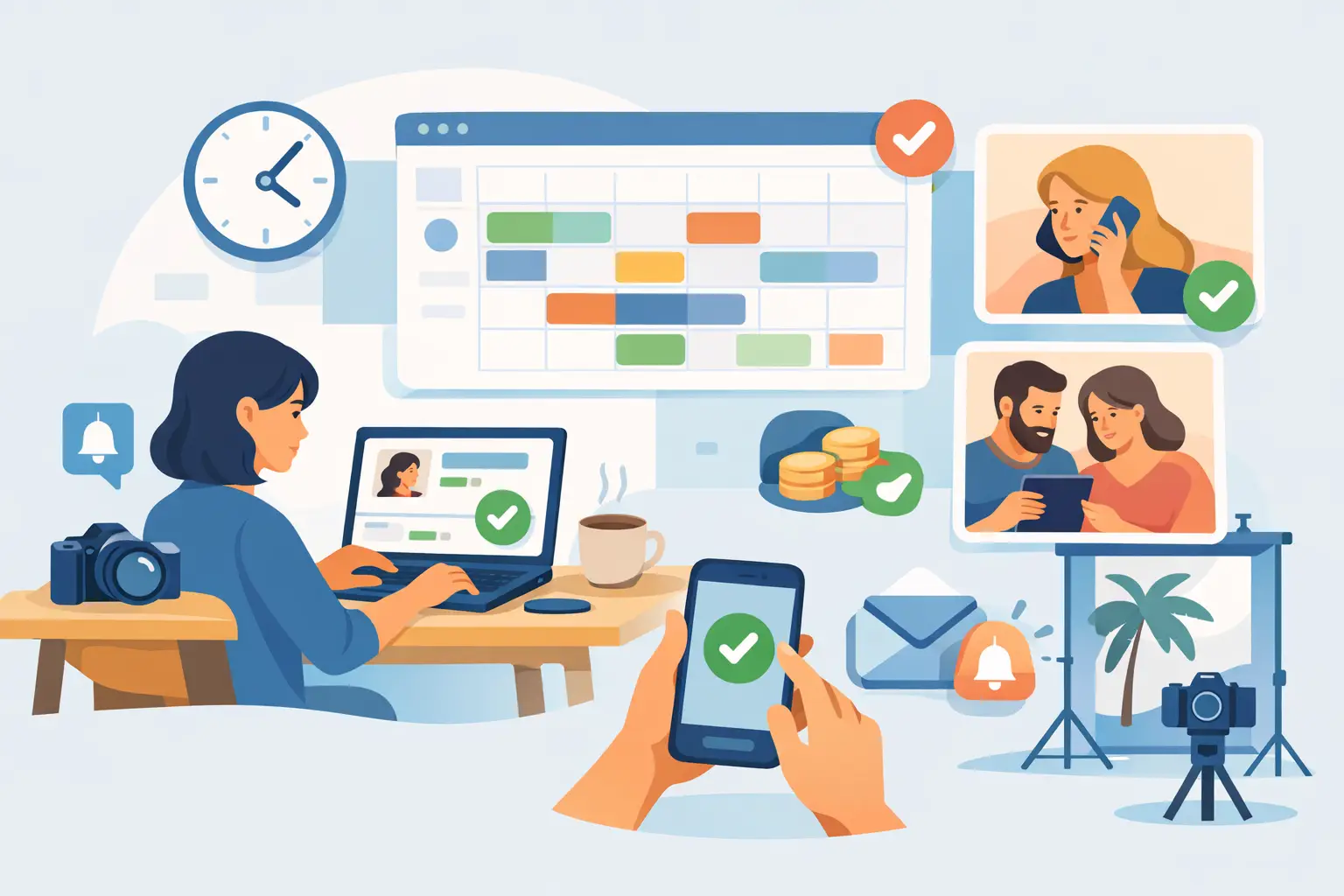
A client says they want to book, asks a few questions, then goes quiet for three days. By the time they reply, the slot is gone, your schedule has changed, or the booking still is not confirmed because no payment was collected. That gap between interest and commitment is where a lot of revenue slips away. Small business appointment management software matters because it closes that gap with a cleaner process for booking, deposits, reminders, and follow-up.
For appointment-based businesses, scheduling is not just admin work. It is part of the sale. If the booking experience feels slow, manual, or unclear, clients hesitate. If it feels polished and simple, they are more likely to commit, show up, and come back.
What small business appointment management software should actually solve
A lot of software promises efficiency, but small service businesses usually have a narrower set of problems. They need fewer messages back and forth, fewer unconfirmed appointments, and fewer empty slots caused by no-shows or last-minute cancellations. They also need a booking process that feels professional without taking hours to set up or manage.
That is why the best small business appointment management software is not the tool with the longest feature list. It is the tool that makes it easier for a client to pick a time, understand what they are booking, pay a deposit, and receive reminders automatically.
For a photographer, that might mean turning inquiries into paid sessions without manually chasing every lead. For a solo beauty or wellness provider, it might mean protecting time that cannot easily be resold. For a small team, it might mean reducing confusion around availability and client communication.
Why simple usually beats feature-heavy
Small businesses often get pushed toward oversized systems that try to do everything. On paper, that can sound efficient. In practice, it often creates a different problem: setup takes too long, the interface feels busy, and the core booking flow gets buried under tools you may never use.
Appointment-based businesses usually do better with software that is focused. If your business runs on scheduled client time, the essentials are clear. You need availability, service selection, deposit collection, confirmations, reminders, and a clean client experience. Anything beyond that should earn its place.
There is a trade-off here. A broader platform may offer more modules, reports, or customization. But if it slows down daily use or makes booking harder for clients, those extras can cost more than they help. For many solo operators and small teams, a lightweight system is a better fit because it supports the booking experience instead of competing with it.
The features that make the biggest difference
Online booking that feels polished
Clients should be able to choose a service, see available times, and book without confusion. A clunky booking page creates friction at the exact moment someone is ready to commit. Clear service options, straightforward timing, and a clean booking flow do more than save time. They make your business look organized and credible.
This matters even more in service categories where clients are buying an experience, not just a slot on a calendar. The booking process sets the tone before the appointment even starts.
Deposit collection at the point of booking
Deposits change the quality of a booking. They help confirm intent, reduce casual holds on your calendar, and protect revenue when premium time slots are limited. If you are still collecting deposits manually after someone books, you are creating another chance for the appointment to stall.
Not every business needs the same deposit structure. Some may want a flat amount. Others may prefer a percentage. The right software should support that decision without making the process complicated for the client.
Automated reminders that reduce no-shows
Reminder automation is one of the simplest ways to improve appointment attendance. Clients forget. They double-book themselves. They intend to reply later and never do. A reminder sent at the right time reduces that risk without adding more manual work to your day.
The key is that reminders should feel useful, not excessive. Too many notifications can feel noisy. Too few, and they do not solve the problem. Most small businesses benefit from a simple reminder sequence that confirms the appointment and gives clients enough notice to plan.
Clear client communication
Clients want to know what they booked, when they booked it, and what happens next. If they need to search old messages for basic details, your process feels fragmented. Good appointment software keeps those details clear from the start.
That clarity also cuts down on admin. Fewer "just checking" messages means fewer interruptions during the day.
How to tell if your current process is costing you bookings
Many small businesses normalize admin friction because they have worked around it for so long. But workarounds still carry a cost. If you are manually confirming appointments, sending deposit requests one by one, or reminding clients individually, you are spending time on tasks that should already be handled.
The bigger issue is not just time. It is inconsistency. Some clients get a smooth experience. Others get delays, mixed messages, or too many steps. That inconsistency can quietly lower conversion rates, especially when clients are comparing multiple providers.
A few signs your process needs attention are easy to spot. Bookings sit in limbo too often. Deposits are requested after the fact. No-shows feel frequent enough to affect revenue. Client conversations are spread across too many places. If any of that sounds familiar, software is not just an operations decision. It is a sales decision.
Choosing small business appointment management software
Start with the booking journey
Before comparing tools, look at your actual client path from first interest to confirmed appointment. Where do people hesitate? Where do you manually step in? Where do appointments get lost?
This is a better starting point than comparing feature lists because it keeps the focus on outcomes. If your biggest issue is no-shows, reminders and deposits matter more than deep customization. If your biggest issue is inquiry drop-off, then the booking flow itself matters most.
Think about the client experience, not just your dashboard
Business owners often evaluate software based on what they see on the back end. That matters, but the client-facing experience matters just as much. A clean, fast booking process can improve conversion before any automation ever kicks in.
Ask simple questions. Is it easy to understand what is being booked? Does the process feel polished on a phone? Can someone confirm an appointment without extra back-and-forth? Those details shape whether a client finishes the booking or leaves it halfway through.
Avoid paying for complexity you will not use
There is nothing wrong with wanting room to grow. But there is a difference between growth-ready software and bloated software. If a platform is built around workflows your business does not need, it can slow down adoption and create more training than value.
For most solo professionals and small teams, the best software supports the core business model: selling time, confirming appointments, collecting deposits, and reducing missed visits. That is enough to produce real operational gains.
A better fit for photographers and other service businesses
Photographers, independent beauty professionals, and wellness businesses have similar scheduling pressure even if their services look different. They are all selling limited appointment inventory. Once a premium time slot goes unfilled or ends in a no-show, that revenue usually cannot be recovered.
That is why booking speed matters. Deposit collection matters. Reminder timing matters. These businesses do not need more admin layers. They need fewer weak points between interest and payment.
A platform like Revenue Studio fits that need when the goal is to create a polished booking flow without dragging in the overhead of a much larger system. The value is not in having more software. It is in having a better path from inquiry to confirmed appointment.
What good software changes day to day
The biggest shift is not dramatic. It is quieter than that. Fewer open loops. Fewer appointments waiting on follow-up. Fewer messages sent just to confirm details. More bookings arrive already committed, with the right expectations and a clearer next step.
That kind of improvement adds up quickly for a small business. You protect more of your calendar, spend less time chasing confirmations, and give clients a better experience without extra effort on either side.
If you are choosing small business appointment management software, the smartest move is usually the simplest one: pick the tool that helps clients book faster, pay sooner, and show up prepared. When the booking process is clear, your schedule gets stronger with it.
The right software should make your business feel easier to book, easier to trust, and easier to run.